Best beaches in Rhodes
The best beaches on Rhodes are on the east coast.
That's the short version.
The longer version is that Rhodes has two very different coastlines doing two very different jobs. The east coast faces the sheltered Aegean, with sandy beaches, calm bays, and water that's swimmable from May through October. The west coast faces the Meltemi summer wind, which is a gift if you windsurf or kitesurf and a problem if you don't. Most of the famous Rhodes beaches, the ones you've already seen in photographs, are on the east.
This guide runs the east coast from north to south, then the west coast the same way, with honest notes on what each beach is worth going to. There's a quick "by experience" cheat sheet at the top if you'd rather skip straight to the answer.
Our team has been based on the island for thirteen years. The recommendations below are what we tell our own guests when they ask, including which beaches to skip in peak season and which to drive an hour for.
A few practical notes that apply almost everywhere
- Sunbed pricing. Organised beaches charge per pair of sunbeds with umbrella, typically ten to fifteen euros a day. The price doesn't really scale with how nice the beach is, so don't read it as a quality signal.
- Free options. Every beach with sunbeds also has a stretch where you can put down a towel and pay nothing. Walk past the rows.
- Parking. Most east-coast beaches have free or cheap parking. The exception is Anthony Quinn Bay, where the small lot fills up before mid-morning in July and August.
- Blue Flag status. A long list of Rhodes beaches hold Blue Flag certification (Faliraki, Tsambika, Kolymbia, Stegna, Lardos, Pefki, Kiotari, Gennadi, among others). It means the water and facilities are checked annually. Useful as a baseline.
- Swim months. Water climbs above 22°C from late May, peaks at around 25 to 26°C in August, and stays comfortable through October.
- When to arrive in peak season. Before 10am for the small famous ones (Anthony Quinn, Agathi, St Paul's Bay). Any time of day for the big ones (Faliraki, Tsambika, Afantou, Gennadi).
The northeast: Elli to Anthony Quinn
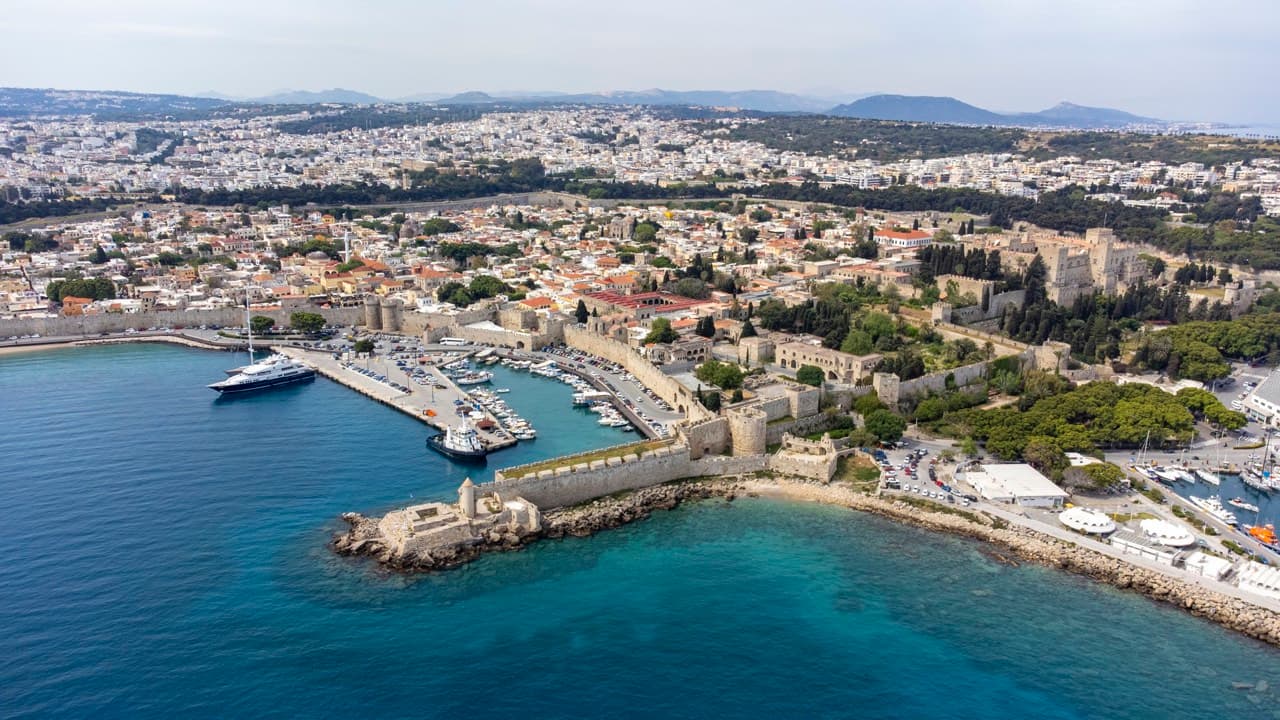
Elli is the town beach at the foot of Mandraki harbour in Rhodes Town. Long, narrow, well-organised, popular with locals year-round. It's not the most scenic beach on the island, but if you're based in Rhodes Town it's the most accessible, and there's something to be said for swimming a hundred metres from the medieval walls. The northern tip ends at the aquarium and the small lighthouse.
Kallithea, ten minutes south, has cleaner and calmer water than Elli, plus the Italian-era thermal complex behind it. Mosaic-tiled pavilions, a seafront terrace, architecture that turns the whole setting into something distinctive. It's been restored and operates as a beach club, so expect to pay for entry. Worth a half-day even if you don't swim.
Traganou, between Kallithea and Afantou, is a quieter pebble beach with a sea cave at the northern end. Blue Flag, mostly drawing locals and snorkellers. The water gets deep quickly, so it's better for confident swimmers than for small children.
Anthony Quinn Bay (Vagies, in Greek) is a small rocky cove cut into the cliffs north of Faliraki. Named after the actor, who bought land on Rhodes while filming The Guns of Navarone in 1960. There's no sand: the shore is pebbles and flat rock, the water is turquoise and unusually clear, and it's one of the best spots on this coast for snorkelling. It gets very busy around midday in summer. Arrive before 10am or after 4pm in July and August, or you'll be paying for a sunbed in a queue. Ladiko, the next cove south, has a similar character and is usually slightly less crowded.
Faliraki is the island's longest organised beach. Wide, sandy, gently shelving, with everything a family or group might need. The northern end is calmer and suits younger children. The further south you walk, the more space you find. Faliraki has a separate reputation for its late-night strip; the strip is one street long, and you won't see it from the beach.
The mid east coast: Afantou to Stegna
Afantou has a long pebble-sand beach behind a golf course. Quieter than Faliraki, fewer facilities, noticeably fewer people. The pebbles thin out as you walk south. The right call if you want a beach day without an organised resort scene.
Kolymbia is approached down a long, straight, eucalyptus-lined avenue planted by the Italians in the 1930s. The avenue ends at a calm sheltered bay with a couple of tavernas right on the water. Low-key, local, good for families who want a beach without the scale of Faliraki. The bay is split by a small headland, with the southern side usually quieter.
Tsambika is the east coast beach most regular visitors mention first. A wide arc of pale golden sand, calm clear water, and the steep hill above the southern end with the small monastery at the top. The beach gets busy in July and August, but its size means it absorbs the crowds better than the smaller spots. Arrive by mid-morning in peak season. The monastery climb (several hundred steps cut into the rock) is worth doing for the view down the coast, even if you go up empty-handed and skip the monastery itself.
Stegna, just south of Tsambika, has the feel of a working fishing village. Tavernas at the water's edge, small boats pulled up on the shore, a beach that stays noticeably quieter through the summer. The right beach for a long lunch and an unhurried swim, in that order.
The southeast: Agathi, Charaki, Lindos area, St Paul's Bay
Agathi (Chrysi Ammos in Greek, meaning "golden sand") is a small cove just north of Charaki, around 40 kilometres south of Rhodes Town. A medieval chapel sits on the rocky outcrop at one side of the beach, the water is shallow and warm, the sand is genuinely golden. It consistently rates among the best beaches on the island for a reason. Go in the morning, especially in July and August.
Charaki, a few minutes further south, is a sheltered pebble and sand beach below the ruins of Feraklos castle. The setting is more dramatic than most: castle on the ridge above, a small headland curving around the bay, calm clear water. Tavernas along the back of the beach do straightforward Greek food well. The village is small enough to walk in five minutes.
Vlicha is the sandy beach in the bay just north of Lindos. More family-oriented than Lindos main, shallow water, a couple of beach tavernas. A useful alternative if Lindos main is crowded.
Lindos main beach sits in the bay directly below the village, with the acropolis on the headland above. Sandy, organised, busy in season but big enough to absorb most of the crowd. The view from the water back up to the acropolis is the photograph people come for.
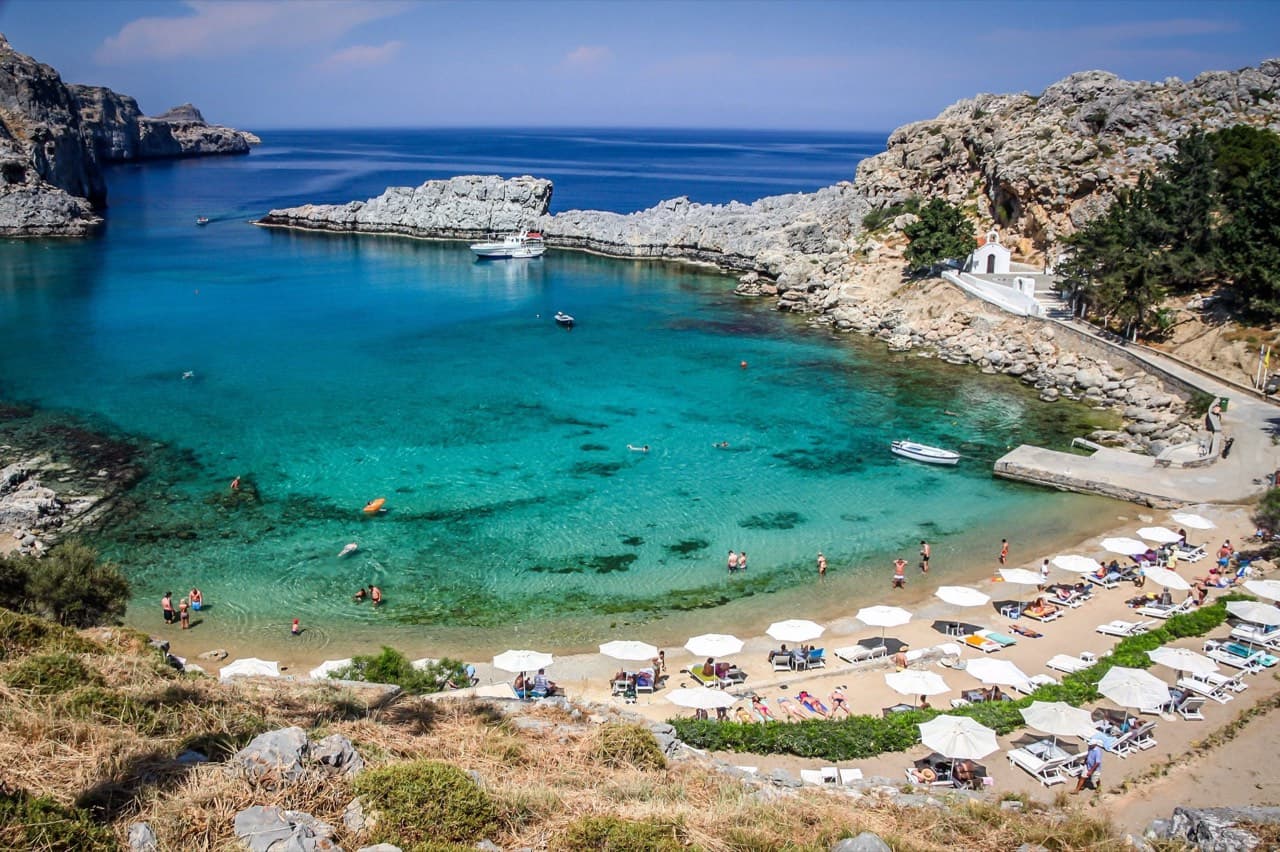
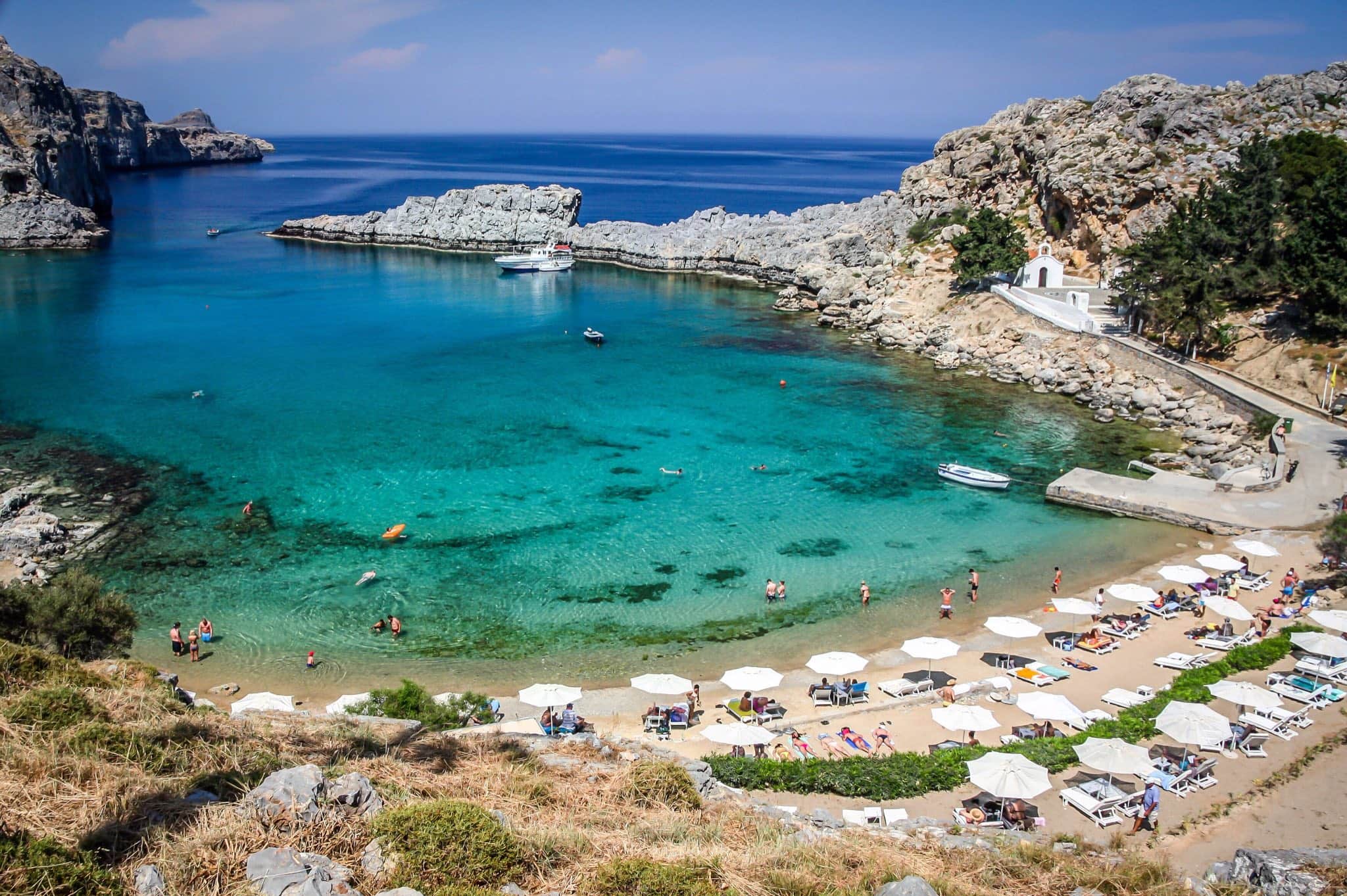
St Paul's Bay sits just south of Lindos, cut into the rock with two narrow sea entrances. It feels nothing like a typical Greek beach. The water is shallow, sheltered, and the clarity is among the best on the island. The tiny chapel on the small headland (capacity around twelve) is one of the more popular wedding spots on Rhodes. Walk down from Lindos in about ten minutes.
Navarone Bay, the small cove around the headland just south of St Paul's, takes its name from The Guns of Navarone, filmed along this coast in 1960. Reach it on foot over the rocks or, more easily, on one of the small boats that run from Lindos in season. Deep, clear, sheltered water and some of the better snorkelling near the village. There's no organised beach to speak of, so bring what you need for the day.
Glystra, a few kilometres south of Lindos near Lardos, is a small sandy cove with rocky outcrops at either end. Turquoise water, shallow swimming, and the kind of beach you remember the name of after you've found it. Smaller than Lindos main, easier to find space than at Agathi.
The south: Lardos to Prasonisi
Lardos beach runs along the bay south of Pefki. Sandy, gently shelving, easy parking, a handful of tavernas. Family-friendly without being a resort.
Pefki beaches are a series of small sandy and pebble coves cut into a low cliff coast. Pefki main is sandy and family-oriented; the smaller coves to either side are quieter.
Kavos, at the southern end of Pefki, is the quietest of those coves. Sand and pebble with rocky outcrops at either end, shallow calm water, and enough shade from the low cliffs to sit out the middle of the day. Easy to reach on foot from Pefki and usually a degree calmer than the main beach.
Kiotari has a long sandy stretch that stays uncrowded even in peak July. A few hotels and tavernas, no real strip, easy swimming. The right beach if you want a long, flat, simple beach day.
Gennadi is the last developed beach on the east coast before things get noticeably wilder. The beach runs for several kilometres, backed by wild cedar trees and low dunes, a long straight stretch of sand with no sunbed rows for most of its length. It suits guests who want to walk and swim without seeing many people.
Plimmiri, around 10 kilometres further south, is four kilometres long and largely undeveloped. Crystal-clear water, Caretta caretta turtles nesting on the shore in season, an almost complete absence of other people. There's one taverna at the small harbour end (a long lunch of grilled fish and a swim afterwards is the way to do it). Getting there requires a car and a willingness to drive a road that stops improving.
Prasonisi, at the southern tip, is where the calmer Aegean meets the open sea across a narrow sandy spit. The eastern side is calm and swimmable. The western side is wind-whipped and draws windsurfers and kitesurfers from across Europe. It's around an hour from Lindos on the coast road. A car is essential, the drive past Plimmiri is genuinely beautiful, and the view from the headland once you arrive is one of the better ones on the island.
The northwest coast: Theologos to Kameiros
The west coast catches the Meltemi, the dry north wind that runs down the Aegean through the summer. The beaches here are mostly pebble or coarse sand, the sea is choppier than the east, and the afternoons are breezier. For a flat, lazy swim, the east coast is still the answer. But the west has its own reasons to come: it's the windsurfing side of the island, it's quieter, and it holds the best sunsets on Rhodes.
Ialyssos and Ixia, the first stretch south of Rhodes Town, are the windsurfing and kitesurfing centre of the island. Most of the equipment hire and the schools are concentrated here, and the wind that makes the swimming unreliable is exactly what the boards want.
Theologos (Tholos), a few minutes south of the airport, is a long pebble-and-sand beach backed by a handful of family hotels. Shallow entry, organised in parts, and a reliable afternoon breeze that makes it a good place to learn to windsurf.
Soroni is the beach below its namesake village, pebble and sand, with a couple of tavernas and a local rather than touristed feel. The chapel of Agios Soulas sits just inland; its late-July festival is one of the bigger village celebrations on this side of the island.
Fanes is a long, quiet pebble beach with little built behind it, drawing windsurfers and locals after space rather than facilities. Come for room to spread out and a clear run at the sunset, not for sunbed rows.
Kopria, near Kalavarda, is a quiet undeveloped pebble cove — the kind of stop you make because the car park is empty and the water is clear. Bring everything; there's nothing here.
Paralia Glyfada, on the road toward ancient Kameiros, is a low-key sand-and-pebble stretch that stays mostly local even in August.
Kameiros Skala is the small harbour where the boats leave for Halki, with a pebble beach beside a row of fish tavernas. It's more a long-lunch-and-ruins stop than a beach day: the ancient city of Kameiros, one of the three that founded Rhodes, sits on the hillside just above.
The southwest: Fourni to the far south
Past Kameiros the coast turns wilder, the development thins to almost nothing, and the beaches are for guests already out exploring the south of the island by car.
Fourni (Fournoi) sits below Monolithos castle on the southwest coast: a pebble beach under dramatic cliffs, with sea caves at one end and clear deep water. Worth combining with the climb up to the castle for the view, and one of the best sunset spots on the island.
Limni, near Apolakkia, is a remote sand-and-pebble beach with almost nothing built behind it. Long, open, usually empty, and a fair drive from anywhere — which is the whole appeal.
Agios Georgios, on the far southwest near Apolakkia and Kattavia, is a wild open-sea beach with no facilities and frequent wind. It trades comfort for solitude: kilometres of empty sand, nobody to rent you a sunbed, and the open Aegean in front of you.
If you've come to Rhodes for the wind, or for an empty beach and a long sunset, the west coast is the answer. If you've come for a warm, flat, easy swim, head east.
How to pair a beach with a villa
Most guests pick a villa first and a beach after. It works better the other way around. Choose the beach (or two) you want to be near, and let the villa shortlist follow.
Rough proximity:
- Tsambika, Stegna, Kolymbia: villas in Kolymbia, Archangelos, and the hills above
- Faliraki, Kallithea, Anthony Quinn: villas in Faliraki, Kalithies, and the central east coast
- Agathi, Charaki: villas in Charaki, Massari, and Malona
- St Paul's Bay, Lindos main, Vlicha, Navarone Bay: villas in Lindos and the hillsides around the village
- Glystra, Lardos, Pefki, Kavos: villas in Lardos and Pefki villages
- Kiotari, Gennadi, Plimmiri: villas in Kiotari, Gennadi, and Lachania
- Theologos, Soroni, Fanes, Kameiros: villas on the northwest coast around Ialyssos, Kremasti, and Soroni
- Fourni, Limni, Agios Georgios: villas in the far southwest, around Monolithos and Apolakkia
If you'd rather not work it out from scratch, message us with the dates and the kind of beach week you're picturing. We've placed thousands of guests across the island over thirteen years and we know which villas put which beach within a useful distance.